
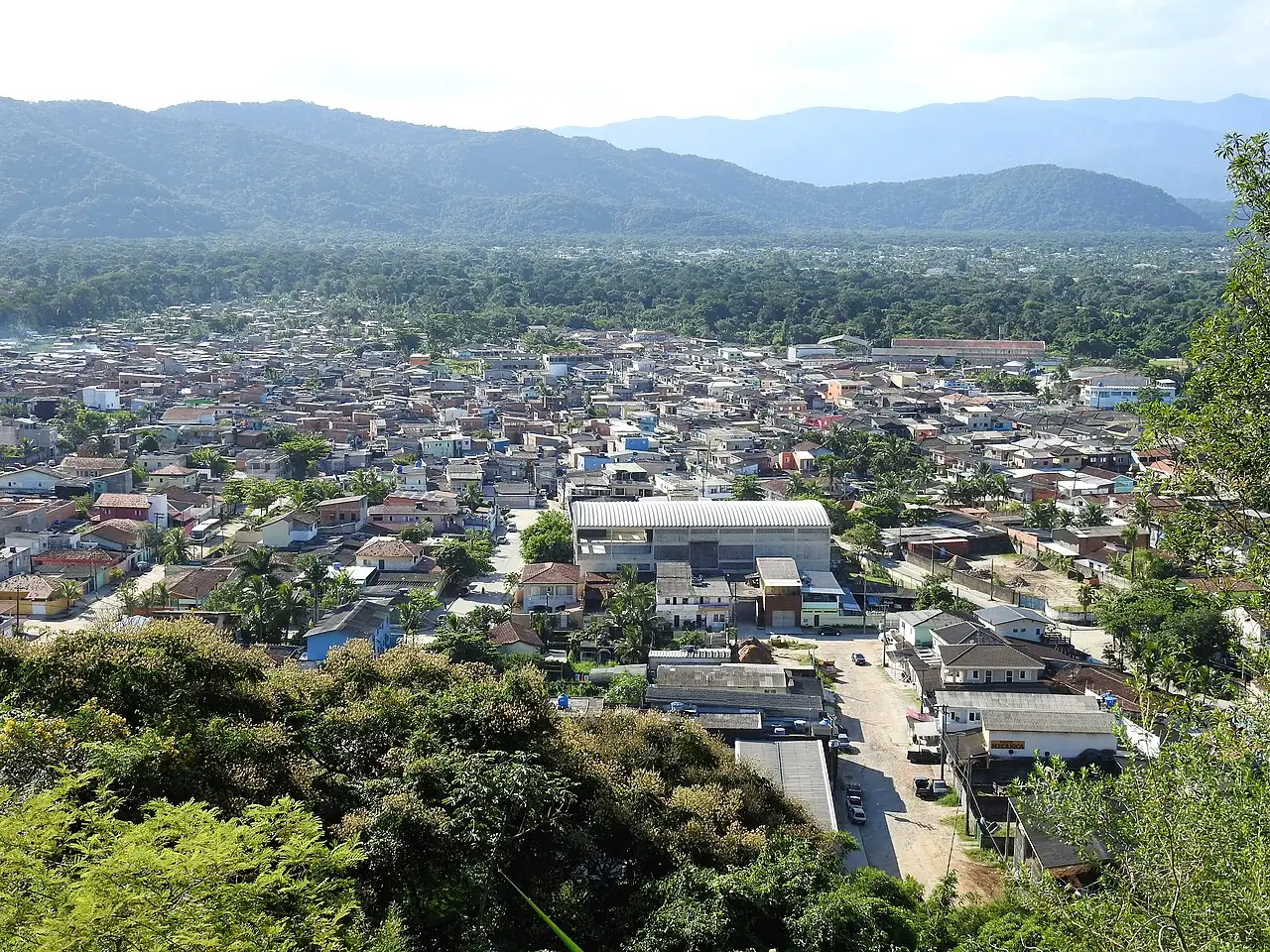

For many families, Guarujá is the beach house for weekends and vacations. For others, it is a permanent address: families who work in Santos or remotely, retirees who traded the capital for the coast, and professionals connected to the port. Living in Guarujá year-round is a choice that combines the sea at your doorstep with giving up some big-city conveniences. Here we show what we have found, neighborhood by neighborhood and topic by topic.
A seasonal town that is also a city
Guarujá has 287,634 residents according to the 2022 Census, but its economy has always revolved around the seasonal population: many of the buildings near the beach are occupied mainly during the summer holidays. Outside the season, the city changes pace, the beaches empty out and traffic along the seafront becomes light. The other pillar of the economy is the left bank of the port and its related activities, along with the chemical industry established on the island since 1976. The municipal HDI, 0.751 in 2010, is classified as high.
In practice, this means two cities in one. In January, lines at the ferry, packed restaurants and services in high demand. From March to November, nearly private beaches on weekdays, more time for the sea and shops that run at a neighborhood pace.
Where to live: seafront, gated communities and Vicente de Carvalho
The choice of address defines the daily routine:
- Urban seafront: Pitangueiras, Astúrias and Enseada concentrate apartments, shops, restaurants and Shopping La Plage. It is the option for those who want to do everything on foot. Enseada is also home to the high-rise condominiums Tortugas and Península.
- High-end houses: Praia de Pernambuco and Jardim Acapulco feature houses on large lots, with a gatehouse and a club. A car is part of daily life.
- Serra do Guararu: Iporanga and São Pedro are beach gated communities set in the Atlantic Forest, with strict environmental and access rules and a greater distance from downtown.
- Boating life: Marinas Guarujá combines home and private dock for boat owners.
- Tombo and Guaiúba: Praia do Tombo, which earned its 17th consecutive Blue Flag in October 2026, attracts surfers and those who want a residential neighborhood close to the sand.
- Vicente de Carvalho: the district facing Santos, where the ferry, the pedestrian boats and, from 2031, the tunnel arrive. It is the island's gateway via Rodovia Cônego Domênico Rangoni.
Daily life: shopping, health care and schools
Everyday shopping is spread across Pitangueiras, Enseada and Vicente de Carvalho. Shopping La Plage, in Pitangueiras, offers a movie theater, stores and dining; Shopping Jequiti, next to the Jequitimar resort on Praia de Pernambuco, is an open-air shopping center. For outings with children, Acqua Mundo, in Enseada, has an 800,000-liter ocean tank.
In health care and education, the island has its own facilities, but the regional reference is Santos: the Baixada's major private and philanthropic hospitals, such as the Santa Casa, Hospital Ana Costa and Casa de Saúde, are on the other side of the channel, as are many of the traditional schools. For higher education, Guarujá has a Unaerp campus. Some of the gated communities in the hills, such as Iporanga, maintain an on-site infirmary with an ICU ambulance for members. We cover this topic in detail in Schools and health care.
Mobility
Living in Guarujá and using Santos means dealing with the ferry, which runs 24 hours a day and offers the Hora Marcada reservation system, and with the pedestrian boats between Santos and Vicente de Carvalho. The overland route, via the Cônego Domênico Rangoni, adds up to about 50 km. The Santos–Guarujá tunnel, scheduled to open in 2031, should cut the crossing to about five minutes. Bicycles are an important means of transportation in the city, which has bike paths.
Climate and sea
The climate is humid subtropical, with an average annual temperature of 21.8 °C and rainfall concentrated in summer: about 2,556 mm per year, with January as the rainiest month and August as the driest. The humidity calls for attention to the maintenance of properties, window frames and equipment. Beach water quality is published weekly by Cetesb, and it is worth checking the bulletin before swimming after heavy rains.
Costs and market
According to the FipeZAP Index, the average residential asking price in Guarujá was R$ 7,024 per square meter in September 2026, up 10.32% over 12 months. The average hides extremes: in Jardim Acapulco, in April 2026, 300 m² houses started at about R$ 3.7 million, with HOA fees between R$ 2 thousand and R$ 4 thousand per month. Older apartments on the urban seafront and compact units in Enseada new developments sit at the other end of the scale.
For those who will live there year-round, fixed costs deserve as much attention as the price: HOA fees, IPTU, maintenance against salt air, insurance and, for those who use Santos, the time and fare cost of the crossing.
What to weigh before moving
- Where the family's work, school and reference hospital are located, and on which side of the channel.
- Daily life during the high season: lines, noise and occupancy of vacation condominiums.
- The type of property: a house in a gated community, a house on a public street or an apartment, and the costs of each.
- The land's status with the SPU, common on the seafront, explained in the guide to buying property in Guarujá.
Grando Soluções Imobiliárias serves those who want to live in Guarujá with local partners and organizes visits that include the actual commute to Santos at the times of the family's routine.
More in Living in the Baixada
Sources consulted (8)
- Wikipedia — Guarujá (population from the 2022 Census, area, official beaches, history) (pt.wikipedia.org)
- MySide — Price per m² in Guarujá by the FipeZAP Index (September 2026 reference) (myside.com.br)
- BS9 — Praia do Tombo wins its 17th consecutive Blue Flag (08/10/2026) (bs9.com.br)
- RAW Guarujá — Living in Jardim Acapulco: neighborhood guide (April 2026) (rawguaruja.com)
- Wikipedia — Unaerp, with campuses in Ribeirão Preto and Guarujá (pt.wikipedia.org)
- Iporanga Condominium Guide, Guarujá (infrastructure and rules; accessed 01/11/2026) (alexkuhne.com)
- QuintoAndar Guides — What to do in Guarujá: forts, Maria Fumaça, Acqua Mundo and restaurants (quintoandar.com.br)
- Melhores Destinos — Santos–Guarujá ferry: fares, schedules and Hora Marcada (updated 03/07/2026) (guia.melhoresdestinos.com.br)
Information verified on 01/11/2026. Found something outdated? Let our team know.